
Fadel Adib
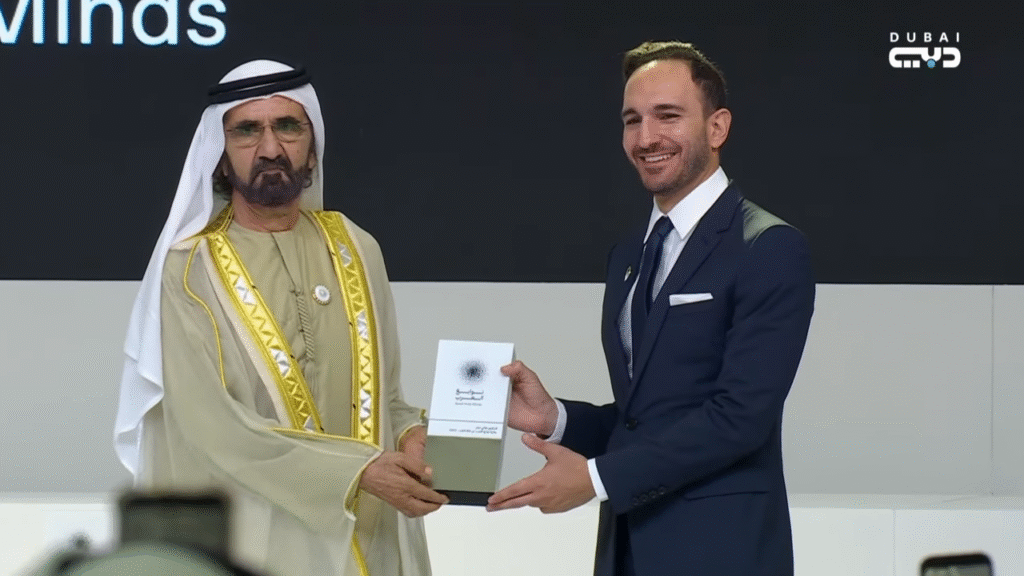
Born and raised in Tripoli, Lebanon, Fadel Adib is an award-winning scientist, innovator, and professor at MIT. He is known for redefining how technology senses, connects, and understands the world. As a result, he has become one of the most influential Lebanese scientists of his generation.
After earning his degree in Computer and Communications Engineering from the American University of Beirut, which later named him its Distinguished Young Alumnus, Fadel joined the Massachusetts Institute of Technology (MIT). There, he completed his Master’s (2013) and Ph.D. (2016) in Computer Science and now serves as an Associate Professor in both the MIT Media Lab and the Department of Electrical Engineering and Computer Science.
He is the founding director of the Signal Kinetics Group, where his team invents wireless and sensor technologies for networking, health monitoring, robotics, and ocean IoT. Through this work, the Tripoli innovator explores how invisible signals can help technology see through walls, communicate underwater, and monitor health remotely.
MIT has recognized Fadel’s research as one of the 50 ways it has transformed computer science. His innovations are now powering Emerald Innovations, a startup used in hospitals to track patients with Alzheimer’s, Parkinson’s, and COVID-19.
As the founder and CEO of Cartesian Systems, Fadel continues translating cutting-edge science into real-world applications. His honors include the ACM SIGMOBILE Dissertation Award, NSF CAREER Award, Sloan Research Fellowship. He has also received recognition by MIT Technology Review’s Innovators Under 35, Forbes 30 Under 30, and the 2023 Great Arab Minds Award. Today, Fadel Adib’s work is featured in global media such as BBC, CNN, and The Guardian.
Through his vision and humility, Fadel Adib continues to inspire a generation of dreamers, proving that from the heart of Tripoli, world-changing ideas can truly take flight.


